Key Components Enabling Intelligence
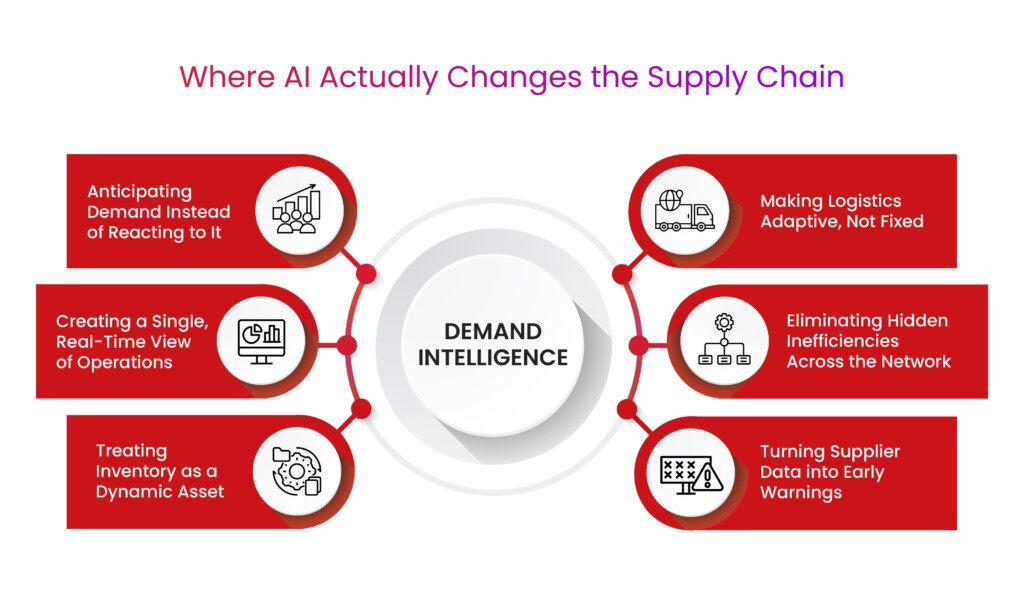
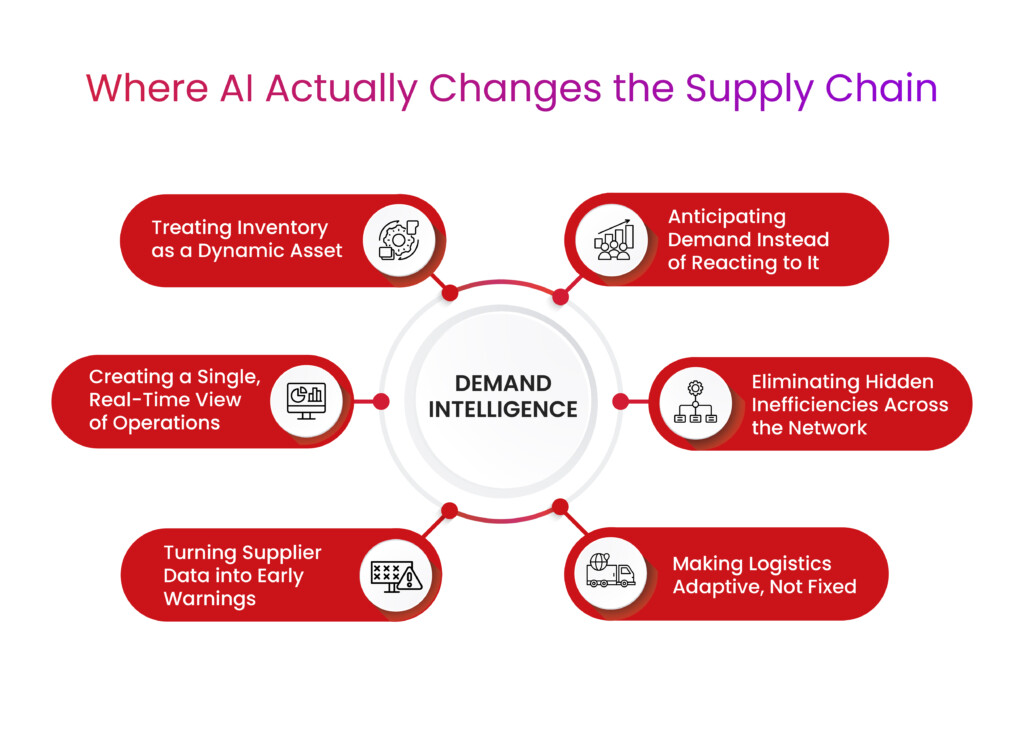
- Artificial Intelligence & Machine Learning: These technologies analyze historical and real-time data to identify patterns, predict outcomes, and optimize decisions across inventory, logistics, and demand planning.
- Predictive Analytics: Advanced statistical models forecast future demand with remarkable accuracy by analyzing hundreds of variables—from weather patterns and social trends to local events and economic indicators.
- Big Data & Unified Commerce: An intelligent supply chain integrates data from every customer touchpoint—online, in-store, mobile, social—creating a single source of truth that drives all downstream decisions.
- IoT & Real-Time Visibility: Sensors, RFID tags, and connected devices provide live data on inventory levels, shipment conditions, shelf availability, and equipment performance, enabling truly responsive operations.
This convergence represents the ultimate expression of digital transformation in the supply chain, creating systems that don’t just execute tasks but anticipate needs and optimize outcomes.
The Intelligent Supply Chain in Action: Real-World Applications
Demand Forecasting & Automated Replenishment
Modern systems use AI-driven demand planning to analyze dozens of variables simultaneously. For example, a sporting goods retailer might combine historical sales data with local marathon schedules, weather forecasts, and fitness app trends to predict demand for running shoes in specific locations. The system then automatically generates purchase orders and initiates automated replenishment, ensuring optimal stock levels without human intervention.
Intelligent Inventory Management
Traditional inventory counts are labor-intensive and prone to error. Intelligent systems employ computer vision for warehouse inventory counting and RFID technology to maintain real-time accuracy. More importantly, they optimize inventory placement across the network—determining whether products should be stored in regional distribution centers, forward-positioned in stores, or held at suppliers based on demand patterns and service level requirements.
Optimized Logistics & Last-Mile Delivery
AI for last-mile delivery optimization analyzes traffic patterns, weather conditions, driver availability, and delivery windows to create the most efficient routes dynamically. These systems can adjust in real time when unexpected delays occur, automatically rerouting shipments and notifying customers—all without human dispatchers.
Unified Commerce Fulfillment
When a customer places a BOPIS (Buy Online, Pick Up In-Store) order, an intelligent system instantly evaluates all fulfillment options: Which store has the item in stock? Which location is closest to the customer? Which has the lowest picking cost? It then automatically assigns the order to the optimal location and notifies store associates.
Proactive Risk Management
Advanced systems monitor global events—weather disruptions, port congestions, supplier issues—and use predictive analytics to assess potential impacts. If a storm is predicted to close a key distribution center, the system might preemptively reroute shipments, adjust safety stock levels, or temporarily modify delivery promises.
The Tangible Business Benefits
Radical Efficiency & Cost Reduction
Intelligent supply chains dramatically reduce manual labor requirements in planning, ordering, and reconciliation. More significantly, they optimize transportation routes, reduce expedited shipping costs, minimize storage expenses through better inventory turns, and decrease waste from obsolescence or spoilage. Companies typically see logistics cost reductions of 15-30% and inventory reductions of 20-50% while maintaining or improving service levels.
Revenue Maximization & Enhanced Customer Experience
By ensuring the right products are available at the right time and place, intelligent systems directly increase sales conversion. Fewer stockouts mean fewer lost sales, while improved delivery speed and reliability boost customer satisfaction and loyalty. Retailers implementing these systems often see sales increases of 5-10% purely from better product availability.
Unprecedented Agility & Resilience
Traditional supply chains struggle to adapt to sudden market shifts. Intelligent systems continuously monitor conditions and automatically adjust parameters—reallocating inventory, modifying forecasts, or shifting sourcing strategies in response to real-time signals. This resilience becomes a competitive advantage in volatile markets.
Sustainability Improvements
Reducing waste through AI supply chain optimization isn’t just good PR—it’s good business. More accurate forecasting means less overproduction. Optimized routing reduces fuel consumption. Better inventory management decreases obsolescence and spoilage. These sustainability benefits increasingly align with both consumer preferences and regulatory requirements.
Inside the Shift: How AI Transforms Retail Supply Chain Operations
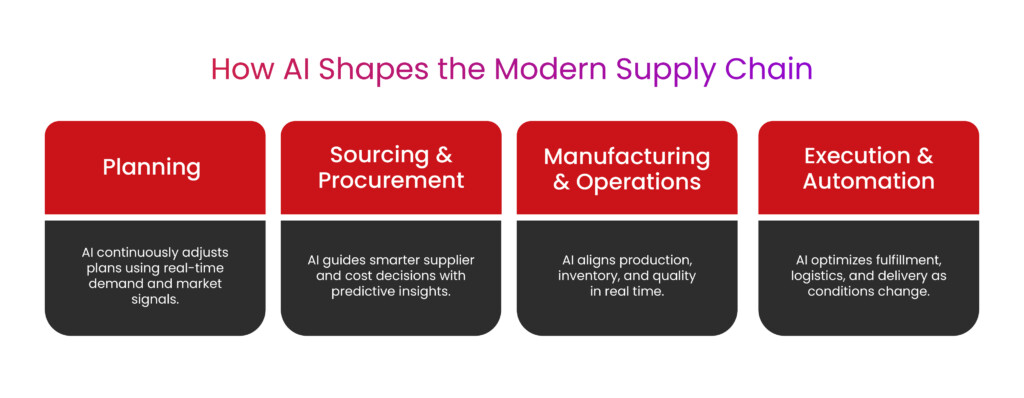
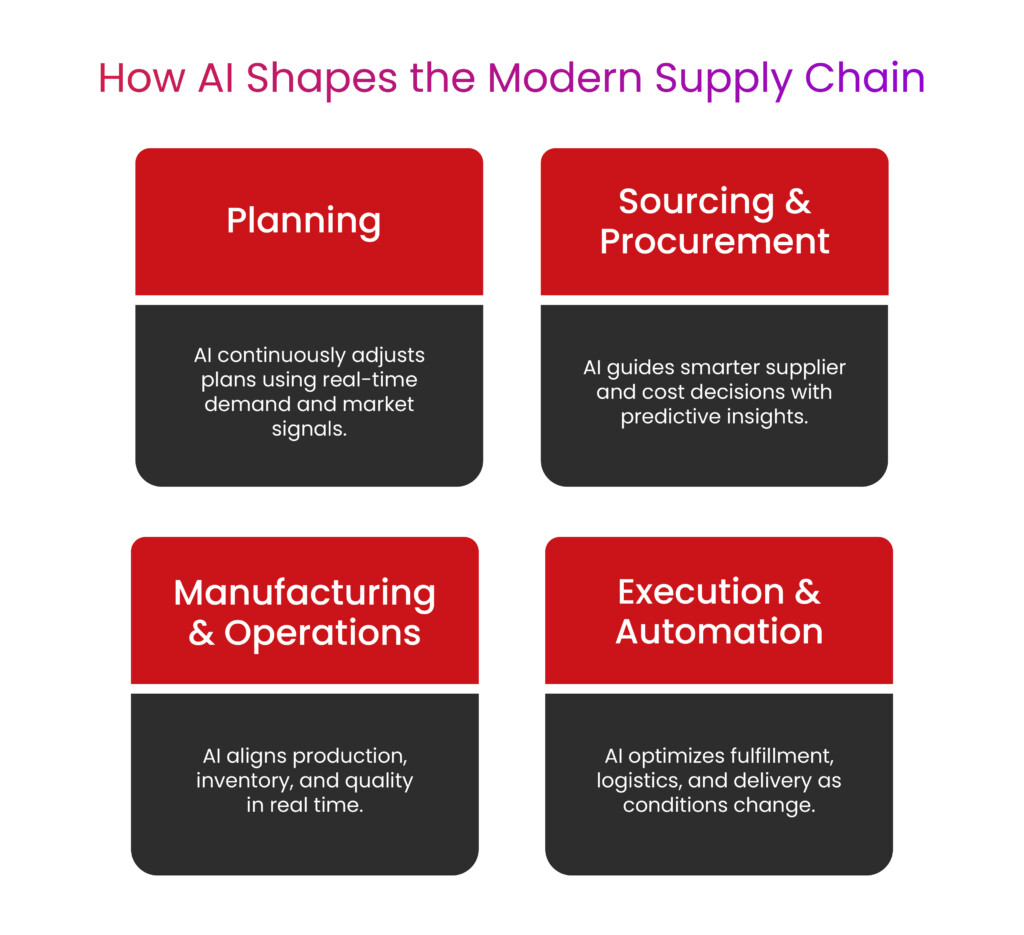
AI doesn’t transform the supply chain all at once.It elevates it step-by-step, creating a journey from visibility → intelligence → autonomy.
Let’s walk through it.
Step 1: Seeing Clearly — Real-Time Data Brings True Visibility
Before AI can optimize anything, retailers need visibility.
Most traditional supply chains rely on delayed reports and fragmented systems. By the time issues appear, the damage is already done. An intelligent supply chain uses real-time data streams—from POS to ERP to warehouse systems—to create a single, unified view.
Retailers suddenly see:
- What’s selling right now.
- Which locations are running low.
- How shoppers move in-store.
- Which SKUs need urgent attention.
- How promotions are impacting demand.
This is the wake-up moment.
Leaders finally see what was invisible before.
Step 2: Knowing Before It Happens — AI Predicts What Comes Next
Once visibility is in place, AI steps in.
Machine learning models analyze years of sales history, seasonality patterns, weather shifts, marketing calendars, supply delays, and even local behavior patterns. They predict:
- SKU-level demand for each store or region.
- Which items will spike next week.
- Which items are likely to stagnate.
- Which stores need replenishment.
- When a stockout is likely to occur.
AI turns the supply chain from reactive → predictive.
Retail teams stop guessing—and start planning proactively.
Step 3: Acting Automatically — Supply Chain Operations Start to Run Themselves
Prediction is powerful. Automation is transformative.
Once AI knows what needs to happen, retailers start automating operational decisions:
- Replenishment becomes instant and data-driven.
- Warehouse routing adjusts automatically.
- Inventory moves to the right stores at the right time.
- Fulfillment decisions factor in speed, cost, and demand.
- Delivery routes optimize for traffic, weather, and fuel use.
This is when retailers start operating like digital-native giants—with speed, precision, and confidence.
- Manual steps shrink.
- Errors decrease.
- Execution becomes consistent.
Step 4: Becoming Autonomous — AI Becomes a Strategic Partner
This is the highest stage of intelligence. At this point, the supply chain becomes not just automated—but autonomous.
AI agents monitor the entire network and proactively suggest:
- Optimal inventory allocation
- Scenario simulations (what happens if sales spike by 20%?)
- Risk alerts for supplier delays
- Cost optimization strategies
- Ideal safety stock levels
- Cross-store balancing to reduce overstocks
AI evolves from a tool → to a partner → to a quiet force that strengthens every decision.
This is the true Intelligent Supply Chain.